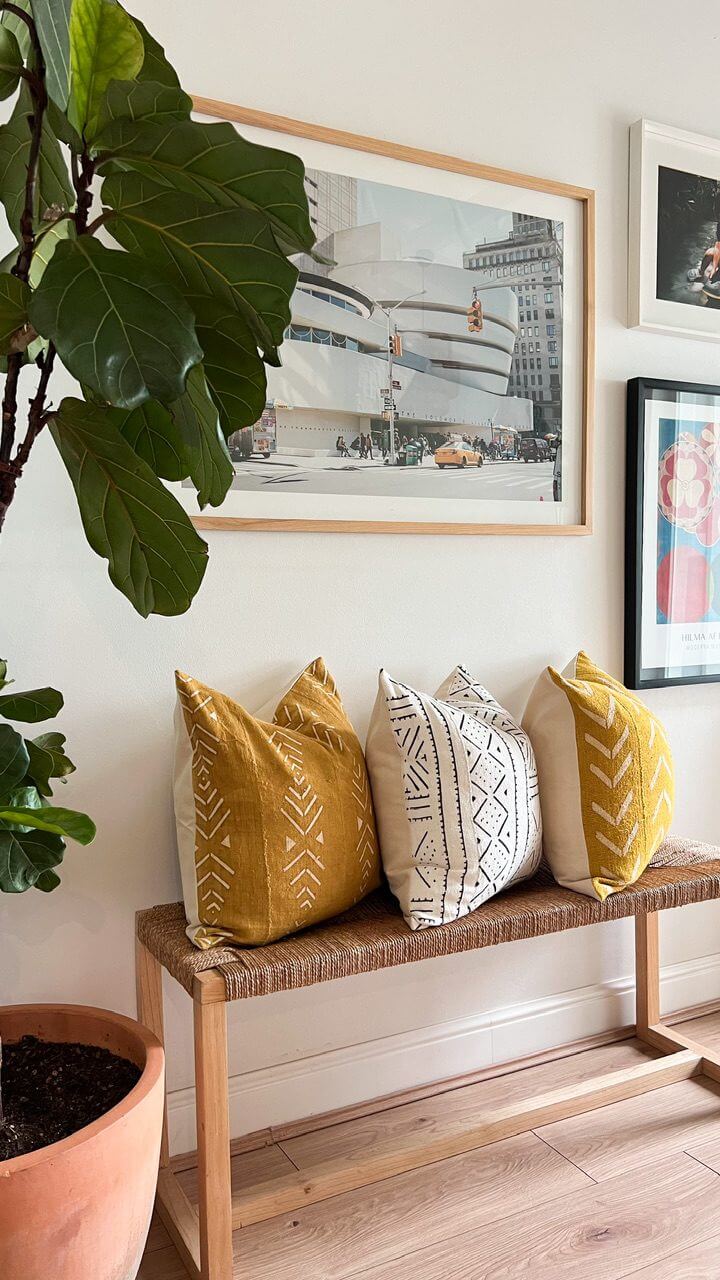
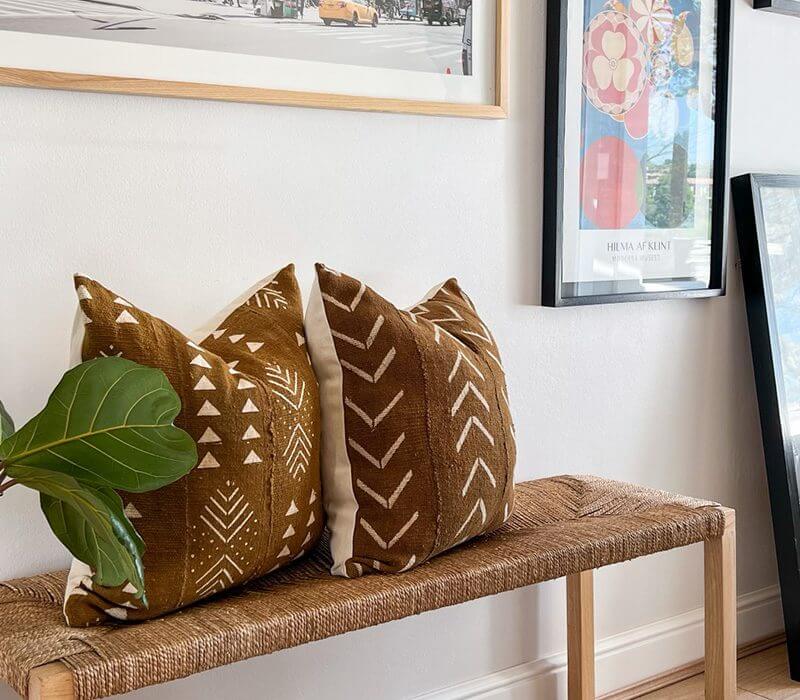
We often get so many questions around Mud Cloth, the texture, what it feels like, are we able to interchange prints etc. I thought it would be a great idea to share with you the process of how this beautiful textile is made. I definitely think my next post should be on how to care for your cloth once you have it!
Mudcloth, also known as “Bògòlanfini” in the Bambara language of Mali, is a centuries-old fabric deeply rooted in West African culture. Its distinctive patterns and rich history make it a beloved textile worldwide. But have you ever wondered how this iconic fabric is made?
Mudcloth has its origins in Mali, particularly among the Bambara people. Historically, it was worn by hunters as camouflage during hunting expeditions and by women as wrappers or shawls during special ceremonies. Over time, its popularity grew, and it became a symbol of cultural identity and tradition.
The Process of Making Mudcloth:
- Harvesting Cotton: The process begins with harvesting cotton, a staple crop in many West African countries. Cotton fibers are carefully picked from cotton plants and cleaned to remove any impurities.
- Weaving the Fabric: Skilled artisans then weave the cotton fibers into large strips of fabric using traditional looms.
- Preparing the Cloth: Once the fabric is woven, it undergoes a series of preparation steps before the mud-dyeing process. First, it is soaked in a solution made from leaves and branches of local trees, such as the n’gallama tree, to condition and soften the fabric. This step also helps the fabric better absorb the dyes.
- Applying Designs with Mud: The most distinctive aspect of mudcloth is its intricate designs, which are hand-painted onto the fabric using fermented mud. Artisans use natural elements, such as sticks or brushes made from the leaves of certain plants, to apply the mud in precise patterns. These designs often feature geometric shapes, symbols, and motifs that hold cultural significance and tell stories passed down through generations.
- Dyeing Process: After the mud designs are applied, the fabric is left to dry in the sun, allowing the mud to oxidize and create the characteristic dark brown or black color. Once dried, the fabric is washed multiple times to remove excess mud, revealing the contrasting patterns against the natural cotton background.
- Final Touches: After washing, the mudcloth is often boiled in a solution of water and local plants to set the colors and enhance their vibrancy. It is then left to dry in the sun once again before being ready for use.
The art of making mudcloth is a labor-intensive process that requires skill, patience, and a deep understanding of traditional techniques. Each piece of mudcloth carries with it a rich cultural heritage and a story of craftsmanship passed down through generations. Whether used as clothing, home decor, or as a symbol of cultural pride, mudcloth continues to captivate and inspire people around the world, bridging cultures and celebrating the artistry of West Africa.
At Spases we celebrate the values and traditions of the textiles we find. Our Mud Cloth is authentic we always try to keep our collections unique. Our aim is to celebrate African design and produce items that tell a story in your home for years to come. Shop our collection of Authentic Mud Cloth items here